TEL: +90 (216) 626 10 50

About the Program
Department of Journalism
Established in the 2009–2010 academic year, the Department of Journalism at Maltepe University Faculty of Communication was reaccredited in 2024 for a period of five years by the Communication Education Evaluation and Accreditation Board (İLEDAK). This achievement once again demonstrates the department’s commitment to providing high-quality, ethical, and contemporary communication education aligned with the needs of the era. As of 2024, the department has also earned the right to use the Turkish Qualifications Framework (TQF) logo.
With the growing impact of digitalization, media production and consumption habits have undergone a profound transformation. New skills and areas of expertise have become essential in news production, fact-checking, media literacy, digital content design, and multi-platform publishing. In this context, the Department of Journalism aims to equip its students with both the core principles of traditional journalism and the creativity, technological literacy, data awareness, and ethical consciousness required by the digital age.
The program’s mission is to train new media-oriented journalists who can work as reporters, editors, page designers, columnists, social media content creators, or digital strategists, while also possessing strong competencies in visual design, data analysis, multimedia storytelling, and communication technologies.
Our academic staff consists of one professor, one associate professor, two assistant professors, one doctoral research assistant, and one research assistant. In addition, experienced journalists and digital media professionals from the industry contribute to the program by leading practice-based courses.
Practical training is one of the strongest components of our curriculum.
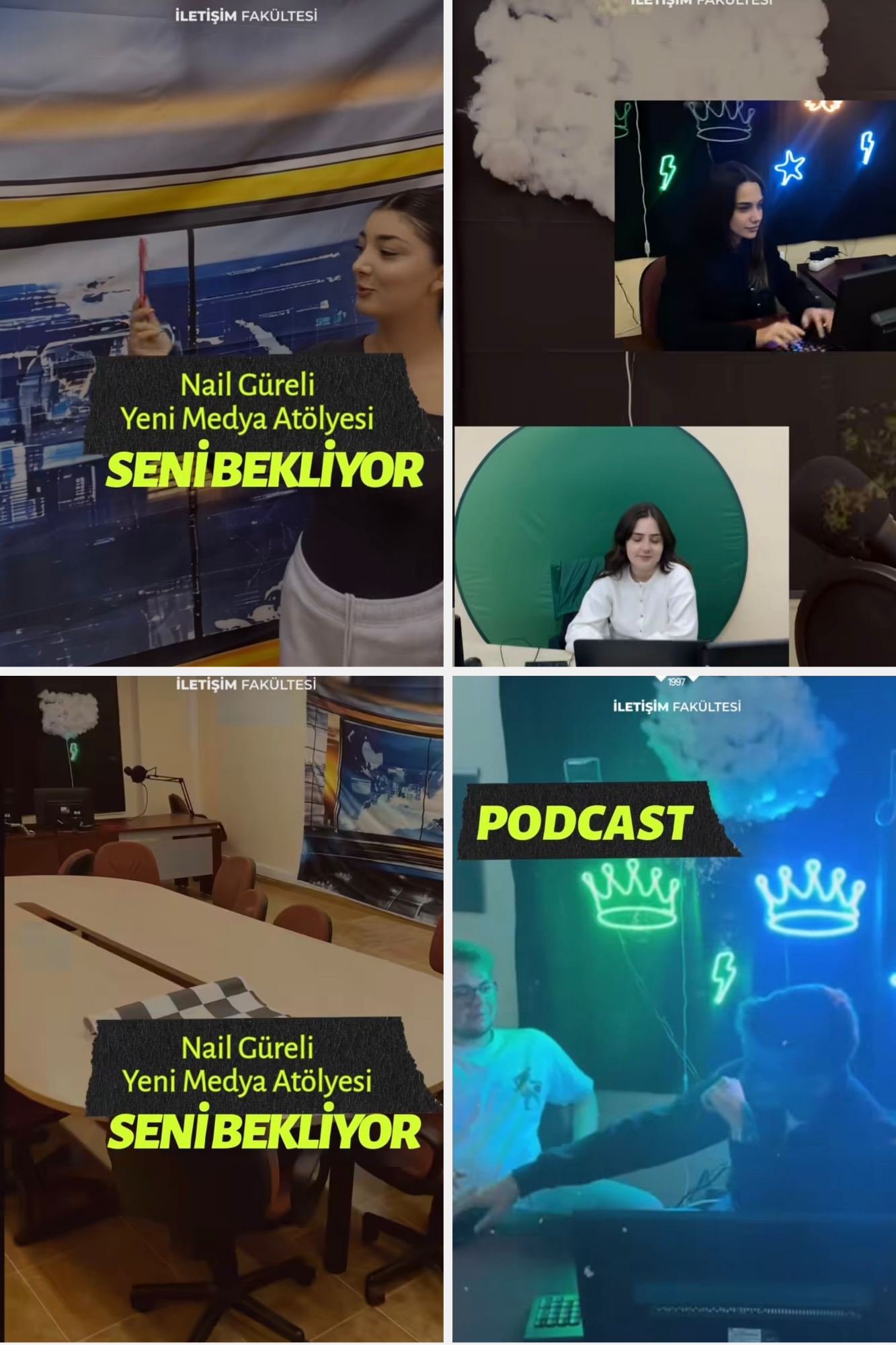
The Nail Güreli New Media Workshop, named after the distinguished journalist Nail Güreli, serves as the heart of next-generation media production. In this fully equipped space, students:
- Produce podcast broadcasts,
- Create social media content and short-form videos,
- Design and publish digital news, graphics, and multimedia content.
These workshop activities help students develop both technical and creative skills, while also gaining experience in teamwork, project management, and media ethics.
Students also participate in real-time news production and online publishing through the department’s digital media platforms, “Medyandergi” and “Unigzt,” gaining firsthand experience of a professional newsroom environment.
In their final year, students present their graduation projects before a Sector Jury composed of media professionals and faculty members. This process allows them to engage directly with industry expectations and to build professional networks even before graduation.
Graduates of the Department of Journalism are ethical, well-equipped media professionals who are capable of informing the public accurately and impartially while keeping pace with the dynamics of the digital age. They are qualified to work in digital media organizations, news agencies, social media agencies, television, radio, and print media, as well as in public institutions and the private sector as press advisors, content producers, communication specialists, or digital media managers.
Assoc. Prof. Dr. Ülkü İlgi Eldem Anar
Head of Journalism Department